
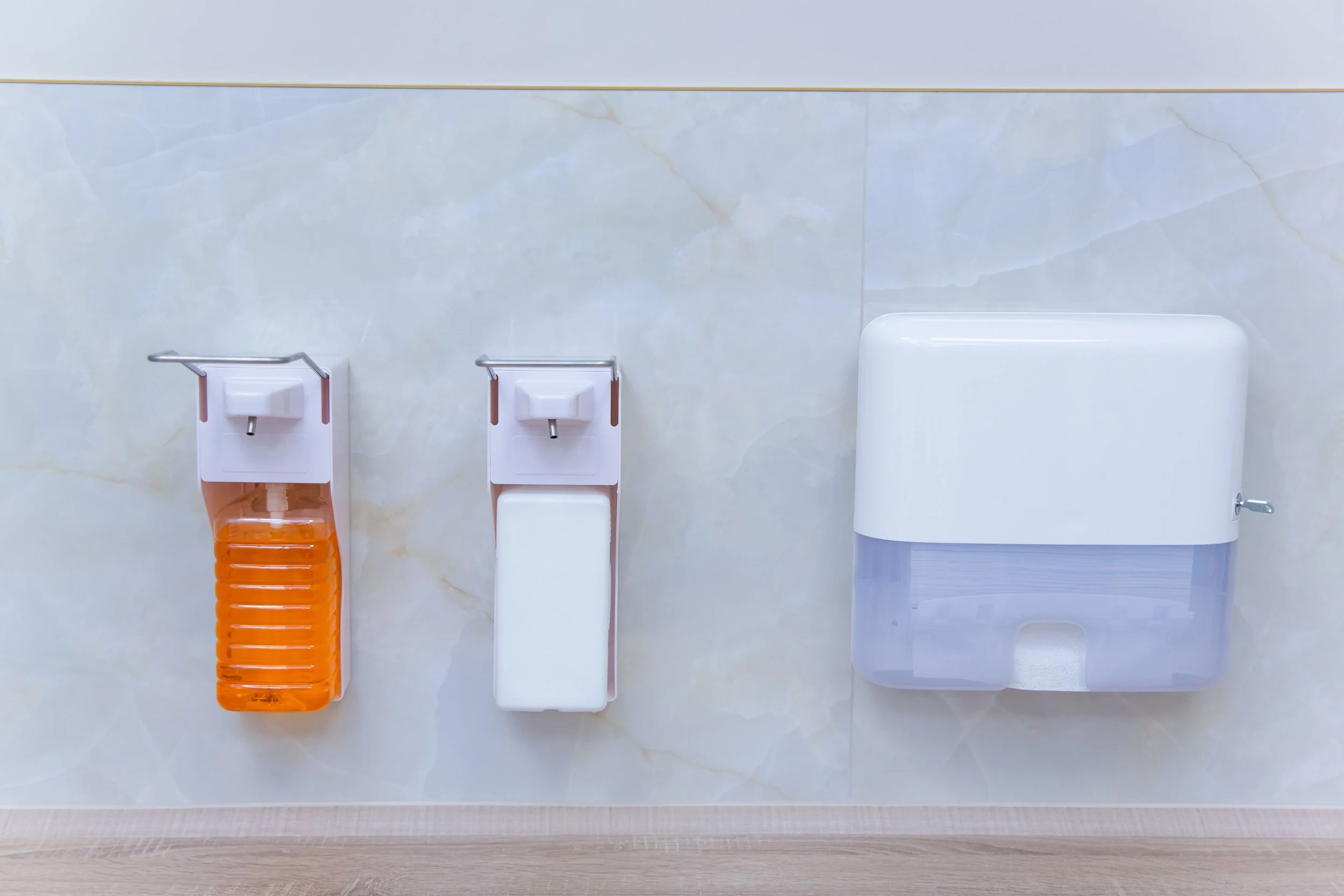
The honest answer is that you usually need both, placed where each performs best. Getting this right matters for employee health, for compliance in food and healthcare settings, and for your supply budget.
When Soap and Water Come First
For most situations, washing with soap and water is the preferred method. Public health guidance describes it as the best way to reduce the number of microbes on hands. It is also the right choice when hands are visibly dirty or greasy, which describes plenty of manufacturing, maintenance and kitchen environments.
Soap and water also work better against certain germs, including norovirus and C. difficile, which sanitizer does not reliably kill. Technique matters: wet the hands, lather every surface, scrub for at least 15 to 20 seconds, rinse and dry with a disposable towel. Restrooms, break rooms and food prep areas should always have working soap, water and towels, and someone should be assigned to check them daily.
Where Hand Sanitizer Fits
Alcohol-based sanitizer is a practical backup when soap and water are not available, and in healthcare settings CDC prefers it for routine hand hygiene because it is fast and less drying with frequent use. For general use, look for a product with at least 60 percent alcohol, since products in the 60 to 95 percent range perform best.
Sanitizer works only when used correctly. Apply the amount on the label, cover all hand surfaces and rub until dry, which takes about 20 seconds. It is a poor fit for greasy or soiled hands, and it does not remove chemical residues such as pesticides or heavy metals. Gloves are not a substitute for hand cleaning, so hands should be cleaned after gloves come off.
Planning Your Supply Mix
A sensible plan places soap and towels wherever sinks are available and adds sanitizer stations at entrances, on production floors, near time clocks and in vehicles or work areas without a sink. This gives employees and visitors a convenient option without replacing proper handwashing.
Think about dispensers as well as product. Touch-free or sealed-refill systems help control waste and make usage easier to forecast, and a single standardized soap across the building simplifies ordering. A-1 Chemical can help you compare foam, liquid and bulk options and set up a reorder schedule so stations are never empty. Tracking usage for a month or two will show which locations burn through product fastest.
Safety and Storage Considerations
Alcohol-based sanitizer is flammable and can cause alcohol poisoning if swallowed, so store it according to the manufacturer's label and safety data sheet, and keep it away from heat sources. In schools and child-care settings, use it with adult supervision and consider child-resistant dispensers.
Check skin tolerance as well, since comfort affects compliance. If staff avoid a product because it dries or irritates their hands, they will skip it, and your investment is wasted. Sample a few options before standardizing, and ask employees which they prefer. Their feedback is free and often reveals problems before they become complaints.
Frequently Asked Questions
Is hand sanitizer as good as washing with soap and water?
Not in every case. Washing is generally preferred, especially for dirty or greasy hands. Sanitizer is a useful alternative when soap and water are unavailable, and healthcare guidance favors it for routine care between patients.
What alcohol percentage should hand sanitizer have?
For general use, choose a sanitizer with at least 60 percent alcohol. Products between 60 and 95 percent alcohol tend to work best.
How long should I wash my hands?
Public health guidance commonly says 15 to 20 seconds of scrubbing. Cover all surfaces, rinse, and dry with a disposable towel.
Does sanitizer kill every germ?
No. It is less effective against some organisms, including norovirus and C. difficile, and on hands that are visibly dirty.
The right mix of soap and sanitizer keeps people healthier and keeps your supply spending under control. Contact A-1 Chemical & Janitorial in Jackson TN today to review your restrooms, break rooms and entrances and build a stocking plan that fits your facility.