
How to Reduce Janitorial Supply Costs Without Cutting Corners on Cleanliness
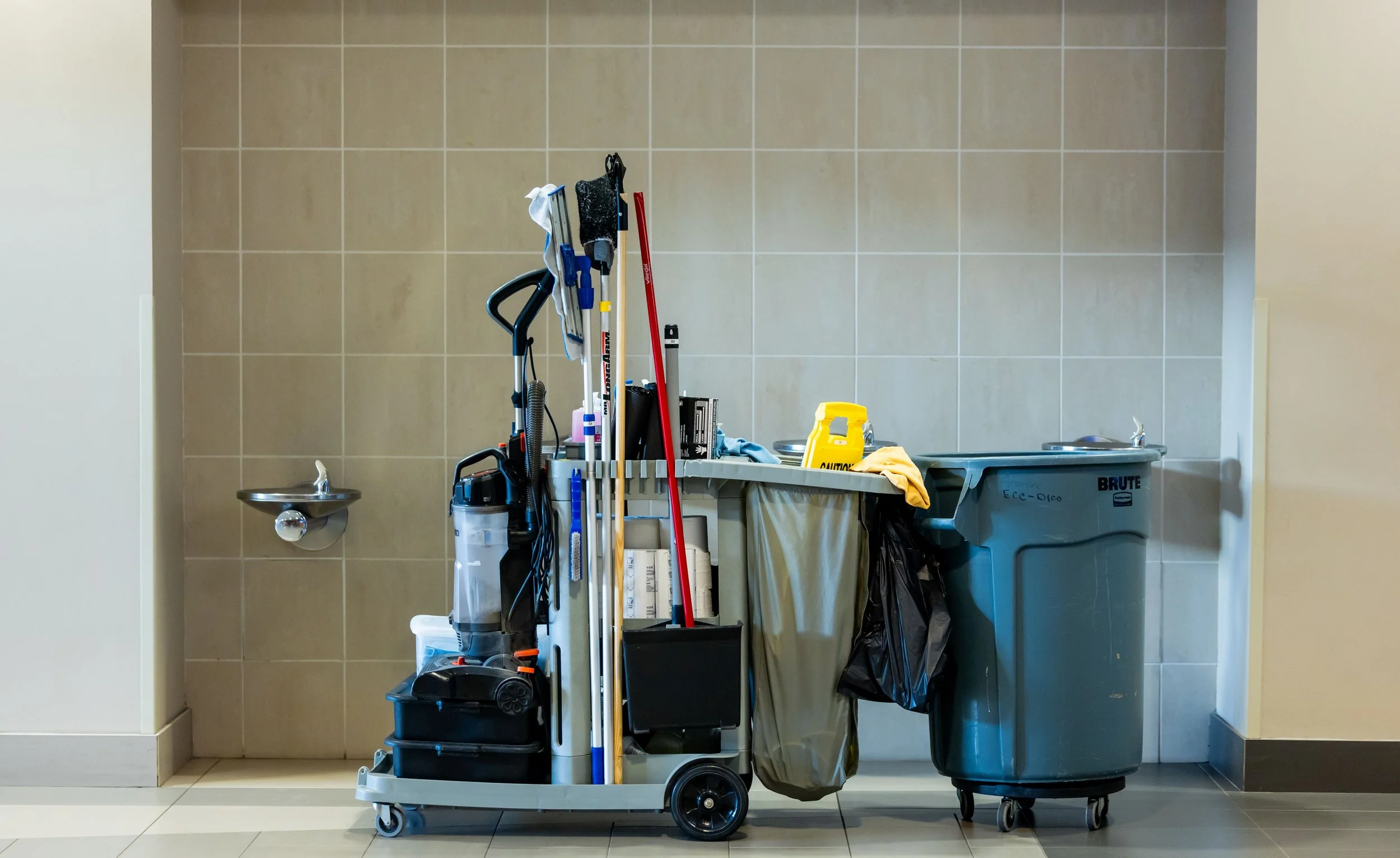
When budgets tighten, cleaning supplies are often one of the first line items facility managers look to trim. But the wrong kind of cost-cutting — switching to a cheaper disinfectant that doesn’t meet dwell-time requirements, or stretching restroom paper products until they run out mid-shift — tends to cost more in complaints, callbacks, and compliance risk than it saves. Reducing janitorial supply costs without cutting corners on cleanliness is possible, but it requires looking at the whole system: what you buy, how much you use, and how predictably it gets restocked.
Audit Before You Cut
The most reliable way to find real savings is to audit current cleaning practices before changing anything. That means reviewing what products are actually being used, how much is being consumed relative to square footage and traffic, and where waste is occurring — before assuming across-the-board cuts are the answer. A short audit often reveals that a facility is buying three or four specialty cleaners when one quality multi-surface product would do the job, or that certain low-traffic areas are being cleaned on the same schedule as high-traffic entryways and restrooms for no operational reason.
Match Cleaning Frequency to Actual Traffic
Not every space in a facility needs the same level of attention. High-traffic areas — lobbies, restrooms, break rooms, entryways — should stay on a daily or more frequent schedule, but storage rooms, back offices, and other low-traffic zones can often move to a weekly cadence with no noticeable drop in cleanliness. Reallocating labor hours this way frees up staff time for the areas that actually drive complaints and impressions, without touching product spend at all. For healthcare facilities, schools, and manufacturing plants across Jackson TN and the broader Southeast, this kind of traffic-based scheduling is usually the single fastest win available.
Consolidate Products and Control Dilution
Buying fewer, better products in bulk is almost always cheaper than stocking a wide range of specialty cleaners in small quantities. A good multi-surface cleaner can typically replace several single-purpose products, which also simplifies training and reduces the odds of misuse. Dilution control and chemical dispensing systems compound the savings by metering the exact amount of concentrate needed for each job, preventing the two most common forms of waste: overuse, which burns through product faster than necessary, and underuse, which forces staff to reapply and effectively doubles labor time on the same task. Metered paper towel and tissue dispensers work the same way, releasing a set amount per pull so a case of product lasts measurably longer.
Use Vendor Managed Inventory to Stop Emergency Buying
A surprising share of janitorial supply overspend comes not from the products themselves but from how they’re purchased. Facilities that reorder reactively — waiting until a chemical or paper product runs out — tend to pay more per unit through rush orders, small-quantity pricing, and emergency substitutions. A Vendor Managed Inventory (VMI) program shifts that burden to the distributor, who tracks usage and restocks proactively before a shortage happens. Facilities on VMI programs commonly report cost reductions in the range of 20–30% once carrying costs, emergency orders, and administrative time are factored in — savings that come from purchasing discipline, not from buying a lesser product.
Frequently Asked Questions
Is switching to cheaper cleaning chemicals a good way to cut costs?
Not on its own. Cheaper chemicals that require more product per application, longer dwell times, or don’t meet the disinfection standard for the space can end up costing more in labor and rework. Consolidating to fewer, well-chosen products and controlling how much is used per job typically saves more than swapping to a lower-grade chemical.
How much can Vendor Managed Inventory really save on janitorial supplies?
Facilities implementing VMI commonly see overall supply cost reductions in the 20–30% range, driven by fewer emergency orders, better bulk pricing, and lower administrative overhead — not by reducing the quality or frequency of cleaning.
Which areas of a facility can safely be cleaned less often?
Low-traffic spaces like storage rooms, conference rooms used infrequently, and back offices can often move from a daily to a weekly cleaning schedule without any noticeable impact. High-traffic areas — restrooms, entryways, and break rooms — should stay on their current frequency.
Does staff training actually affect cleaning supply costs?
Yes. Staff trained on proper dilution ratios, correct product selection, and equipment care use less product per task and cause less equipment wear, which reduces both consumable and replacement equipment costs over time.
How do I start a janitorial supply cost audit?
Start by pulling twelve months of purchase history and matching it against square footage and traffic patterns by area. Look for redundant products, mismatched cleaning frequency, and how often supplies are ordered on a rush basis — that last one is often the clearest sign that a VMI program would help.
Cutting janitorial supply costs and maintaining a clean, compliant facility aren’t mutually exclusive — they just require a more deliberate purchasing and scheduling strategy. Contact A-1 Chemical & Janitorial to discuss your facility’s supply needs and find where the real savings are.