
Choosing the Right Floor Machine: Scrubbers, Buffers, and Burnishers Compared
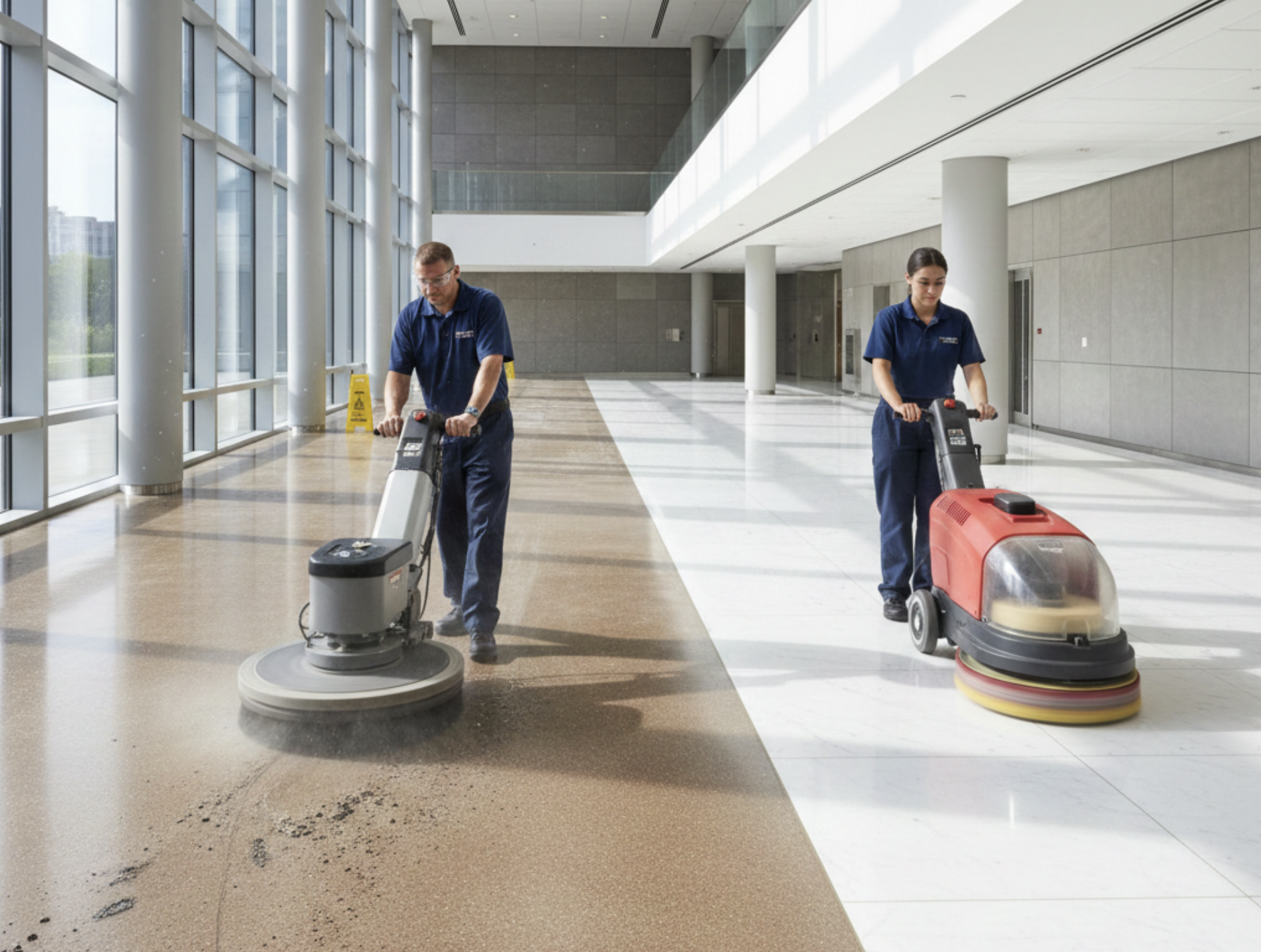
A facilities manager recently told us he'd bought a floor buffer expecting it to deep-clean a break room — then discovered it just spread dirty water around. It's one of the most common purchasing mistakes in commercial cleaning: scrubbers, buffers, and burnishers look similar but are built for different jobs, and choosing the wrong floor machine wastes budget and labor hours. Here's how the three compare, and how to figure out which one — or which combination — your facility actually needs.
Floor Scrubbers: The Deep-Cleaning Workhorse
Floor scrubbers apply water and cleaning solution, agitate it with a brush or pad, and then vacuum up the dirty water in a single pass. That combination — apply, scrub, recover — is what makes scrubbers the right tool for genuine deep cleaning: grease in a manufacturing break area, tracked-in soil at a school entrance, or grime buildup in a restaurant kitchen. Unlike buffers or burnishers, scrubbers don't polish or restore shine; their job is soil removal, and they're the workhorse for high-traffic facilities that deal with consistent grime.
Buffers: The Multi-Purpose Maintenance Machine
Buffers spin at a relatively slow 150–330 RPM, which makes them versatile: with the right pad, a buffer can scrub, clean, strip old finish, or apply a light polish. The tradeoff is that a buffer can loosen soil but can't recover the dirty water the way a scrubber can, so cleaning with one usually means following up with a mop or wet-vac. Buffers are a good fit for facilities that need one machine to handle several light-duty maintenance tasks rather than a single specialized job.
Burnishers: High-Speed Polish for Sealed Floors
Burnishers operate in an entirely different range — typically 1,000 to 3,000 RPM — using speed and friction rather than water to melt and re-level the top layer of floor finish. The result is a uniform, high-gloss surface on sealed floors like VCT or terrazzo. Industry maintenance guidance indicates that facilities using high-speed burnishers on a regular schedule can cut floor maintenance time by as much as 40% and reduce full strip-and-recoat frequency by 25–50%, since burnishing extends the life of existing finish instead of stripping it. Burnishers aren't a substitute for scrubbing — they're a finishing step for floors that are already clean.
Matching the Machine to Your Facility
Most commercial facilities end up needing more than one of these machines, not because a vendor recommends buying more, but because deep cleaning and finish maintenance are genuinely different jobs. A healthcare facility with sealed VCT flooring typically needs a scrubber for daily soil removal and a burnisher on a set schedule to maintain gloss and extend recoat intervals. A school or restaurant with less emphasis on high-gloss finish may get by with a scrubber and a buffer instead. The right starting point is walking your floor plan by flooring type and traffic pattern before deciding what to add to the equipment list.
Frequently Asked Questions
Can I use a burnisher on an unsealed or unfinished floor?
No. Burnishing relies on friction against an existing layer of floor finish to create shine — without that finish layer, a burnisher will simply generate heat and wear against bare flooring or concrete. Unsealed floors need a finish applied first, typically after a deep scrub, before burnishing makes sense.
How often should a burnisher be used compared to a scrubber?
Scrubbing frequency depends on foot traffic and soil load — often daily in high-traffic areas. Burnishing is typically done on a set schedule, commonly weekly to monthly, since its purpose is maintaining an already-clean, already-finished floor rather than removing dirt.
Is a buffer ever a substitute for a scrubber?
For light cleaning, sometimes, but a buffer can't recover the dirty water it generates, so it isn't a true substitute for genuine deep cleaning. It's better suited to finish maintenance and occasional light-duty tasks between full scrubbing cycles.
What floor types should never be burnished?
Unsealed concrete, most unfinished wood, and certain natural stone floors generally shouldn't be high-speed burnished, since there's no finish layer to work with and the friction can damage the surface. When in doubt, check the flooring manufacturer's maintenance guidance before running a burnisher on a new floor type.
The right floor machine depends less on brand and more on matching the equipment to your flooring type, traffic pattern, and maintenance schedule. Facilities across Jackson, TN, Tupelo, MS, and the broader Southeast rely on the same basic principles regardless of building size. If you're not sure whether your facility needs a scrubber, a buffer, a burnisher, or some combination, contact A-1 Chemical to walk through your floor plan and cleaning schedule together.