
Industrial Laundry Detergents and Chemicals
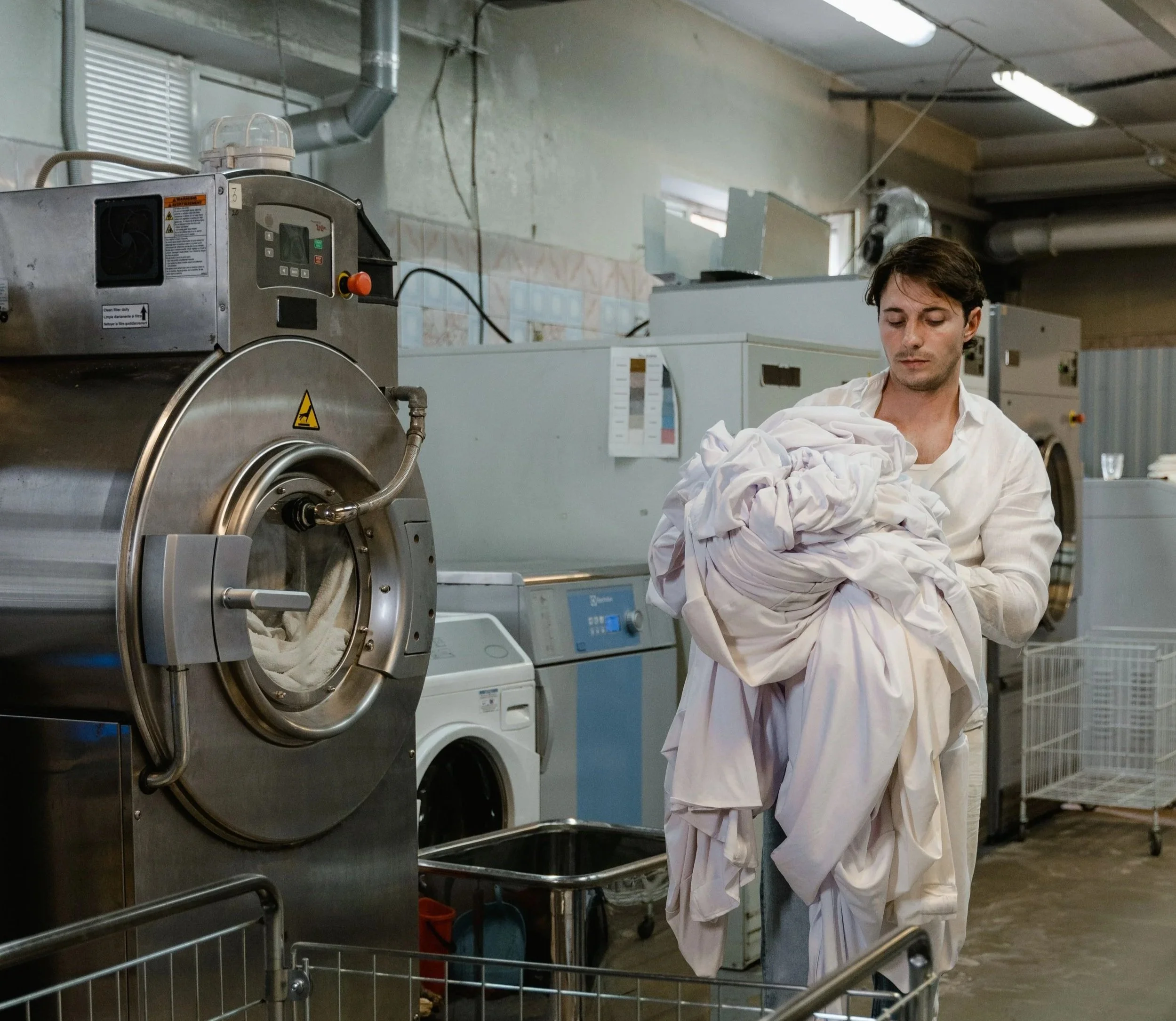
If your facility launders towels, linens, uniforms, or mop heads by the hundreds of pounds a day, a single all-purpose detergent from the retail shelf isn't going to cut it. Commercial and industrial laundry operations — from healthcare linens to restaurant towels to manufacturing uniforms — rely on a coordinated chemical program, not just one product, to get loads clean, sanitized, and fabric-safe at scale. For facility and operations managers across Tennessee, Mississippi, and the Southeast managing an on-site laundry or evaluating a laundry chemical supplier, understanding what each chemical in the program actually does makes it much easier to solve problems like graying linens, lingering odors, or fabric breakdown.
The Five Components of a Commercial Laundry Chemical Program
A typical commercial wash formula isn't a single detergent — it's a sequence of chemicals, each added at a specific point in the cycle. The core components are an alkaline builder, a detergent, a bleaching agent, a neutralizing sour, and a softener. Alkalis raise the wash water's pH, which opens up fabric fibers and helps release embedded soil before the detergent goes to work. The detergent itself combines surfactants to lift soil away from fabric with water-conditioning agents that counteract hard water minerals. Bleach, whether chlorine or oxygen-based, breaks down remaining stains into soluble particles that rinse away and provides a sanitizing effect. A neutralizing sour is added in the final rinse to bring the water back to a neutral pH, which prevents yellowing and keeps alkaline residue from irritating skin. Softener is the last step, reducing static and leaving fabric feeling finished rather than stiff.
Choosing Detergents for Different Facility Types
The right detergent chemistry depends heavily on what's being washed and who it touches. Healthcare and elder-care facilities generally need enzyme-based detergents to break down protein soils — blood, bodily fluids, food residue — at the lower wash temperatures often used to protect delicate fabrics, paired with a non-bio or hypoallergenic formula where linens will touch sensitive skin. Restaurant and food-service operations washing heavily soiled kitchen towels benefit from a stronger alkaline builder and a bleach step to cut grease and control odor. Manufacturing and industrial uniform programs dealing with oil, grease, or heavy soil typically need a higher-alkalinity formula and may require a solvent booster to fully release ground-in contamination that a standard detergent alone won't remove.
Disinfection and Compliance Considerations
For healthcare facilities and any operation laundering items that could carry bloodborne pathogens, the chemical program needs to do more than just clean — it needs to disinfect. That means using an EPA-registered laundry additive with verified kill claims against organisms like C. diff or MRSA, run at the correct concentration and wash temperature to be effective. OSHA's Hazard Communication Standard also applies here: facilities must maintain Safety Data Sheets for every laundry chemical on site, particularly bleaches and destainers, and train staff on safe handling and what to do in the event of skin or eye contact.
Getting the Dosing and Water Chemistry Right
Even the right chemical program underperforms if dosing is off. Most commercial laundry chemicals are sold as concentrates dispensed through an automatic dosing pump calibrated to each machine and load size — guessing with pour-and-scoop measuring leads to inconsistent results and wasted product. Water hardness matters just as much as the chemicals themselves: hard water reduces detergent effectiveness and can leave mineral buildup on fabric, so facilities in areas with harder water often need a higher detergent dose or a water-conditioning additive to get the same results. A laundry chemical supplier that can test your water and calibrate dosing equipment on-site typically prevents more problems than switching products repeatedly to chase a result.
Frequently Asked Questions
Do I need different detergent for healthcare linens versus restaurant towels?
Yes. Healthcare linens generally call for enzyme-based, hypoallergenic formulas that are gentle on skin and effective on protein soils, while restaurant towels usually need a stronger alkaline and bleach combination to cut grease and control odor.
What's the difference between chlorine bleach and oxygen bleach in a laundry program?
Chlorine bleach is more aggressive and effective for sanitizing and whitening white fabrics, while oxygen bleach is milder and safe for colored fabrics that would be damaged by chlorine.
Why does my laundry need a sour if I'm already using detergent?
The sour neutralizes leftover alkalinity from the detergent and alkali steps in the final rinse. Without it, fabric can retain a high pH that causes yellowing over time and can irritate skin, especially in healthcare or elder-care settings.
How do I know if my laundry chemicals are being dosed correctly?
Signs of incorrect dosing include graying or dinginess in white linens, persistent odor after washing, fabric feeling stiff or overly soft, and inconsistent results between loads. A dosing pump calibration check by your chemical supplier is the most reliable way to confirm accuracy.
Are eco-friendly laundry chemicals as effective as traditional formulas?
Many biodegradable, eco-certified laundry chemicals now perform comparably to traditional formulas, particularly for general soil levels. Facilities with heavy grease, blood, or industrial soil should confirm performance claims and, where needed, pair a green detergent with a targeted booster for tougher stains.
A well-matched laundry chemical program keeps linens looking better, lasting longer, and meeting the hygiene standards your facility is held to. Contact A-1 Chemical to talk through the right detergent, bleach, and dosing setup for what you're washing.